

Waterfowl Summer Sausage


Watch Video
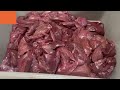
A small batch of summer sausage is a wonderful way to use the big honkers, snows, Ross', ducks, or any waterfowl to create a flavourful, moist luncheon meat.
There are three methods for finishing summer sausage: in a smoker, in a large pot of boiling water, or sous vide, where the sausage is brought to finishing temperature. Fowl is best ground coarse. Use curing salt, rather than a sugar-based cure. Dextrose, which is used instead of sugar, enhances flavour and can be found at sausage supply stores or online.
Casings can be filled with a sausage stuffer or jerky gun, or directly off a grinder with an auger attachment.
Ingredients:
- 7 lbs ground goose
- 3 lbs regular ground pork
- 6 tbsp kosher salt
- 2 oz (30 g) dextrose
- 2 tsp curing salt
- 2 tbsp dry mustard
- 1 tbsp ground coriander
- 2 tsp garlic powder
- 2 tbsp mustard seed
- 2 tbsp water
Directions:
- Combine the ground meats in a large tub or bowl and sprinkle the spices and curing salt over the mixture. Add water and mix very well until the spices and meat are evenly distributed.
- Use fibrous casings for smoking, or plastic casings for hot water treatment. Wet the casings, insert them into the sausage press nozzle, or one of the grinders. Keeping back pressure on the casing, fill it tight, leaving enough room to tie it off or finish with hognose pliers.
- Preheat your smoker to 225°F. Place the summer sausage on the rack or hang it if there’s an option to do so. Smoke the sausage for 3 or 4 hours, until the internal temperature reaches 160°F.
- Immediately place the sausage in a cold-water bath to prevent shrinking. Allow the meat to cool in a refrigerator overnight before slicing.
Finishing option
Summer sausages can be smoked for an hour or two, then finished in hot water. A sous vide set to 170°F will bring the water to the perfect temperature, allowing the sausage to reach the desired internal temperature of 160°F. Monitor the temperature with a thermometer. The pot or even a meat tub can be used as the heating vessel with the water circulator. Cover it with a towel to maintain the water level and heat. A large stockpot with boiling water can also be used, but the sausage needs to be fully submerged to cook properly, and this may mean making the stuffed casings to fit a specific pot.
Tips
Pork butt, or front shoulder, is ideal for making sausage, as it is 60% meat and 40% fat. Hog jowls are another great option to ensure there is enough fat or moisture. Avoid lean ground pork, as the sausage will crumble due to a lack of fat and moisture.
Double or triple grind the pork to make it more like a paste. The smooth consistency will help create a firm sausage that is easy to slice and hold together.
Grind the waterfowl once, with a regular or coarse plate.
For recipes, it's also common to specify the grinder plate size, since that determines the texture:
- Coarse grind: 3/8-inch (10 mm) plate
- Medium grind: 1/4-inch (6 mm) plate
- Fine grind: 3/16-inch (4.5 mm) or 1/8-inch (3 mm) plate
Curing Salt Knowledge
For 5 pounds of meat, the standard rate is 1 level teaspoon of Cure #1 per 5 pounds (2.27 kg). The amount provides the correct concentration of sodium nitrite (156 ppm), which is the industry standard for smoked and cooked sausages.
If you prefer to weigh it: 1 level teaspoon = approximately 6.0 grams, depending on the manufacturer.
For fresh spices, casings, and sausage-making equipment and supplies, visit https://highcaliberproducts.com.